How Cuban Bakery Aurora CO Perfects Every Pastry
Walk into a great bakery early enough, and you can tell what kind of day it will be before you taste a thing. You hear the scrape of sheet pans, the thump of dough on a bench, the soft rattle of trays settling into racks. Butter warms just enough to become workable. Guava paste gives off that deep, fruity sweetness that somehow smells richer than jam. Sugar starts to caramelize at the edges of a pastry, and the whole room shifts from quiet preparation to full appetite.
That sensory precision is what separates a bakery that merely produces pastries from one that perfects them. At a strong Cuban bakery Aurora CO customers do not come in only for sweetness. They come for structure, timing, texture, and familiarity. They expect a pastry to shatter lightly when bitten, not crumble into dust. They want fillings that taste vivid rather than cloying. They notice whether the dough is laminated well enough to produce distinct layers, whether the pastelito is properly sealed, whether the glaze is balanced or heavy-handed. These details sound small until you have watched people return week after week for the same item because it tastes exactly the way they hoped it would.
Cuban pastry has that effect on people. It is comfort food, celebration food, breakfast food, and coffee break food all at once. It belongs equally at a family gathering and on a paper plate beside a small cup of cafecito. Getting it right takes more than a recipe. It takes discipline, consistency, and an understanding that each component, from flour temperature to bake time, changes the final result.
The standard is higher than it looks
From a distance, a pastry case can seem simple. Rows of guava pastries, cheese-filled turnovers, croquetas nearby, perhaps a few cakes and cookies. Yet most bakery failures happen because the products look easier than they are. Lamination can go wrong without announcing itself until baking. Fillings can leak if the dough is rolled too thin or sealed carelessly. Sweetness can flatten flavor if it is not anchored with salt, acidity, or dairy.
In Cuban baking, expectations are also cultural. Many customers know what a proper pastelito de guayaba should taste like because they grew up with one. They know the difference between a buttery, flaky shell and a shortcut dough that just imitates flake through dryness. They know cream cheese should temper the intensity of guava, not disappear beneath it. That creates a useful kind of pressure. Bakers cannot rely on novelty alone. They need execution.
A bakery serving Aurora has another layer to manage. Altitude affects baking in quiet but meaningful ways. Doughs can dry out faster. Sugar work can behave differently. Oven spring, moisture retention, and proofing all need close attention. Recipes that perform one way at sea level may need changes in hydration, proofing time, or oven settings to produce the same tenderness and lift in Colorado. This is where real bakery experience shows. The teams that succeed do not panic over variables. They build systems around them.
Flour, fat, and the discipline of dough
Most pastry quality starts long before the oven. It begins when ingredients meet, and when the baker decides how much friction, warmth, and time the dough can tolerate.
For flaky Cuban pastries, fat management is everything. Butter gives incomparable flavor, but it is temperamental. Shortening offers stability, especially in a production environment, but too much can mute taste and create a waxier finish. Many bakeries work with a blend or choose one depending on the product and production schedule. What matters is not ideology. It is outcome. A bakery that understands pastry will choose fat based on the desired texture, room conditions, and customer expectations.
Temperature matters at every stage. If the dough warms too much during lamination, layers smear and merge. The baked pastry may still puff, but the flake becomes coarse rather than fine. If the dough stays too cold, it resists rolling and can tear, which causes uneven lift in the oven. Good bakers spend more time monitoring feel than many people realize. They are not just following minutes on a timer. They are reading elasticity, surface dryness, and resistance under the pin or sheeter.
Hydration deserves the same respect. Slightly under-hydrated dough may seem easier to handle at first, but it often bakes up tight and brittle. Too much water, especially without sufficient rest, leads to stickiness, overworked dough, and compromised layers. The sweet spot is narrow. In a busy shop, that is where standardization becomes invaluable. Not because standardized baking is soulless, but because repetition is what lets skill show up reliably.
Why lamination is a test of patience
Few bakery techniques expose sloppiness more quickly than lamination. You cannot rush it without paying later. Each fold creates potential. Each rest preserves it. Each degree of temperature control either protects the layers or destroys them.
Customers experience the result in a second. They bite into a pastry and instantly know whether the baker respected the process. Great lamination creates a crisp exterior that gives way to delicate interior sheets. It feels light, even when the pastry is rich. Poor lamination feels dense or greasy, as if all the butter stayed in one place and the dough never had a chance to lift around it.
At a well-run Cuban bakery Aurora CO, lamination is not treated as a back-of-house mystery. It is baked into the schedule. Production has to account for resting time, refrigeration space, and the fact that dough cannot be pushed just because the morning line gets long. That sometimes means making hard operational decisions. Some products may have smaller daily batches. Some items may sell out. That can frustrate late customers, but it often signals a better bakery, not a worse one. Freshness and structure rarely reward overproduction.
Fillings carry more responsibility than people think
It is easy to talk about pastry in terms of flake, but fillings are where personality lives. A guava filling should taste bright and unmistakable, not sugary in a generic way. Cheese filling should be creamy and slightly tangy, with enough body to hold inside the pastry but not so much stiffness that it feels chalky. Coconut, meat, and custard fillings each bring their own technical demands.
The challenge is proportion. Too much filling and the pastry turns soggy or bursts during baking. Too little and the customer feels shortchanged. The best bakeries solve this not by making everything oversized, but by calibrating bite balance. Each mouthful should include pastry and filling in roughly the right relationship, so the product eats as one thing rather than two parts pressed together.
Guava and cheese is a classic example. The guava brings intensity, sweetness, and fruit character. The cheese contributes lactic richness and softens the sugar hit. If the guava is too dominant, the pastry tastes one-note. If the cheese is too heavy, the product loses its brightness. Achieving balance here is less about innovation than restraint.
There is also a shelf-life question that experienced bakers respect. Some fillings improve after a short rest because the flavor settles. Others degrade quickly, weeping moisture or tightening in texture. A pastry case should not be treated like long-term storage. Strong bakeries rotate aggressively, pull products before quality drops, and accept a bit of waste as the cost of protecting reputation. Customers can taste when a bakery is trying to stretch one more hour out of something that should have been replaced.
The oven does not forgive guesswork
Even beautiful dough can fail in the bake. Oven temperature, airflow, deck loading, and timing determine whether the pastry sets with definition or collapses into greasiness. This is why seasoned bakers develop a kind of split attention. They are always observing color, lift, aroma, and the pace of browning across multiple products at once.
Cuban pastries often need that exact point where the exterior turns deeply golden without crossing into bitter darkness. Underbake them and the centers can remain gummy, especially around fillings. Overbake them and the sugars on the surface harden too much, while the butter flavor gets overshadowed by excess toastiness. There is no universal minute mark that solves this. Humidity, dough thickness, pan color, and oven recovery all change the result.
Altitude in Aurora complicates things further. Moisture evaporates differently, and dough can lose tenderness if bakeries do not compensate. Some operations adjust oven temperature slightly. Others alter proofing, hydration, or the amount of sugar in specific formulas. The point is not that altitude makes excellence impossible. It is that excellence requires adaptation, not imitation. A formula borrowed from Miami or Tampa cannot simply be copied and expected to behave the same way in Colorado.
Freshness is not a slogan, it is a schedule
When people say a bakery tastes fresh, they are usually noticing a chain of disciplined decisions. Dough was likely mixed at the right time, not too early. Fillings were portioned with service flow in mind. Baking was staggered instead of front-loaded. Finished products were protected from drying out but not trapped in steam. None of this is glamorous, yet it is where bakery quality lives.
One of the clearest signs of a serious bakery is how it thinks about the morning rush. Cuban pastries are strongly tied to breakfast and coffee habits. That means demand spikes sharply at specific hours. A bakery that bakes everything at dawn and hopes it lasts until afternoon will almost always compromise texture. The sharper operation bakes in waves. The first trays satisfy the earliest customers. Later trays replenish top sellers. Slower-moving items are produced more carefully, often in smaller quantities.
This is also where front-of-house knowledge matters. Staff should know which items came out recently, which products are best warmed, and which are at their absolute peak right now. That kind of guidance is not salesmanship in the cheap sense. It is part of quality control. A pastry that is technically good can still disappoint if served outside its best window.
The role of cafecito and context
A Cuban pastry is rarely eaten in isolation. It is usually part of a rhythm that includes coffee, conversation, and a few unspoken expectations about pace and pleasure. That matters because pastry design should account for how people actually consume it.
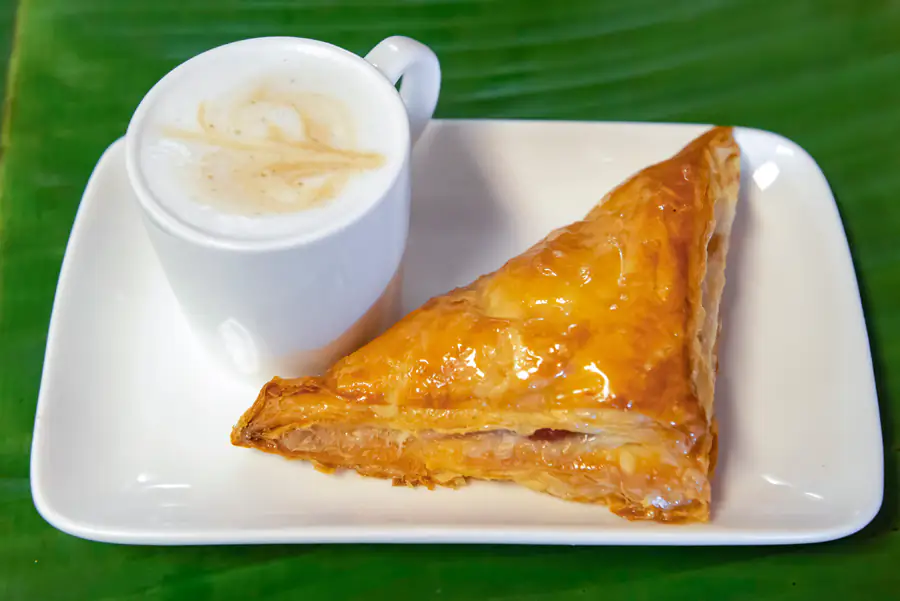
Take sweetness. Something that tastes overpowering on its own may feel balanced beside strong Cuban coffee. A cheese pastry that seems mildly salty by itself can become ideal when paired with sweet espresso. Great bakeries understand this relationship intuitively. They do not formulate in a vacuum. They taste products the way customers experience them, with coffee, in the morning, sometimes quickly, sometimes standing at a counter between errands.
That pairing also shapes portioning. A pastry meant to accompany cafecito should feel satisfying without becoming leaden. It should finish cleanly enough that the next sip of coffee feels welcome. The best shops understand this rhythm so well that their pastry case reads like a conversation between textures and intensities.
Why consistency builds loyalty faster than novelty
There is plenty of room in baking for creativity, but pastries that define a bakery’s reputation are usually the classics. People may try a seasonal special once out of curiosity. They return repeatedly for the guava pastry that always flakes the same way, the cheese pastry that never turns overly sweet, the loaf that slices cleanly every time.
This matters especially for a neighborhood business. Customers build habits around reliability. They stop in before work. They bring a dozen pastries to the office on Fridays. They pick up boxes for birthdays, baptisms, graduations, or a Sunday visit to family. In those moments, consistency is not a technical virtue. https://emilianoegmq342.cavandoragh.org/cuban-bakery-aurora-co-enjoy-every-bite-of-tradition It is trust.
A strong Cuban bakery Aurora CO earns that trust by reducing variation wherever variation does not help. Ingredient sourcing stays steady. Production methods are documented. Staff are trained to notice small defects before customers do. Trays are not sent out just because the schedule says so. They are sent out when they are ready.
That discipline can seem old-fashioned in a food culture obsessed with constant reinvention. Yet in practice, the bakeries that last tend to be the ones that know exactly which traditions deserve protection. Not every product needs a twist. Some recipes have survived because they already solve the problem beautifully.
The customer notices more than you think
Bakery owners sometimes underestimate how much regular customers can read from the case. They notice when the glaze is thicker than usual. They notice when pastries are smaller. They notice whether the edges are dry, whether the bottoms are pale, whether the filling has shifted. Most may not have the technical vocabulary to describe these changes, but they feel them immediately.
That is why quality control should include the obvious and the subtle. Visual appeal matters because it sets expectation, but texture matters more because it confirms whether the promise was honest. A pastry can look polished and still fail if the bite is tough or greasy. Conversely, a slightly rustic pastry can become unforgettable if it delivers a perfect balance of crackle, tenderness, and flavor.
The strongest bakeries usually share a few habits:
- They taste their own products throughout the day, not just during recipe development.
- They train staff to reject near-misses rather than rationalize them.
- They accept that small-batch production can protect quality better than volume for volume’s sake.
- They pay attention to packaging so steam, condensation, and transit do not ruin the final texture.
- They treat customer feedback as useful data, especially when repeat buyers mention the same detail.
These habits do not create drama. They create standards. And standards, maintained over time, become reputation.
Heritage matters, but craft carries it forward
People often speak about Cuban bakeries with warmth because they connect them to memory. The pastries remind them of parents stopping for breakfast before work, grandparents arranging trays for a gathering, or afternoons where coffee and pastry were less a meal than a ritual. That heritage is powerful. It gives the food emotional weight.
Still, nostalgia alone does not keep a bakery good. Craft does. Recipes have to be executed by people who understand why each step matters. New staff have to be taught not just what to do, but what to look for. Managers have to know when to preserve tradition exactly and when a local condition, like altitude or ingredient availability, requires a smart adjustment.
That balancing act is the mark of a mature bakery. It honors flavor memory without becoming rigid. It adapts without drifting. It serves longtime customers while making the food accessible to newcomers who may be discovering Cuban pastry for the first time.
When that balance is achieved, every pastry carries more than sweetness. It carries judgment. Someone decided the dough needed one more rest. Someone held back a tray because the color was off. Someone adjusted a filling so it would stay bright after baking. Someone understood that the difference between good and exceptional is often just a few degrees, a few minutes, or a little more patience.
What perfection really looks like in the pastry case
Perfection in a bakery is rarely flashy. It is not about making the biggest pastry in town or the most extravagant one. It is about making a product that feels complete. The crust has the right snap. The layers separate cleanly. The filling tastes vivid. The sweetness lands exactly where it should. The pastry pairs naturally with coffee and leaves you wanting another bite, not a glass of water.
That kind of perfection is built from repetition and restraint. It depends on bakers who care about dough temperature, proofing conditions, ingredient quality, and bake curves. It depends on owners who understand that freshness cannot be faked. It depends on service staff who know the products well enough to steer people toward the best experience.
At the best Cuban bakery Aurora CO, none of those things are accidental. They are the result of a thousand quiet choices, made before dawn, repeated day after day, until excellence looks effortless from the customer side of the glass. That is the real craft behind every memorable pastry. Not luck, not trend, not marketing. Just skill, discipline, and a deep respect for what the pastry is supposed to be.
Cuba Bakery & Café
15028 E Mississippi Ave, Aurora, CO 80012
+1 303-752-2822
FAQ About Cuban bakery Aurora CO
What are Cuban pastries called?
Many small Cuban pastries are called pastelitos. They can have sweet or savory fillings, such as guava, cheese, guava and cheese, or seasoned meat. Cuba Bakery & Café lists guava, cheese, guava-and-cheese and beef pastries on its menu. Ask the bakery about current availability and ingredients when ordering.
What are traditional Cuban pastries?
Common Cuban bakery choices include flaky pastelitos filled with guava, cheese or meat. Cuban bakeries may also offer empanadas, breads and desserts alongside coffee. Cuba Bakery & Café lists pastelitos, several empanada fillings, pan Cubano and desserts such as tres leches and bread pudding. Selection can vary, so confirm the day's choices with the bakery.
What makes Cuban bread different?
Cuban bread is known for its light interior and a thin crust that becomes crisp when toasted or pressed. Traditional recipes often use lard, although ingredients vary by baker. It is commonly served as buttered toast or used for Cuban sandwiches. Cuba Bakery & Café lists pan Cubano and tostada on its menu; ask staff about the ingredients in their bread if you have dietary restrictions.
Ends · JASPEREWDY119